What to put on a tree service box truck
- 'Tree service' and the big three: removal, trimming, stump grinding Homeowners look for the job they have. Removal and stump grinding are the high-ticket words.
- ISA certified arborist, if someone on the crew is It's the credential homeowners and HOAs have heard of. Say it only if it's true and current.
- 'Licensed & insured' and '24-hr storm damage', where true Tree work is dangerous and people know it; insured is the word that gets the big removal. Storm response is where the emergency money is.
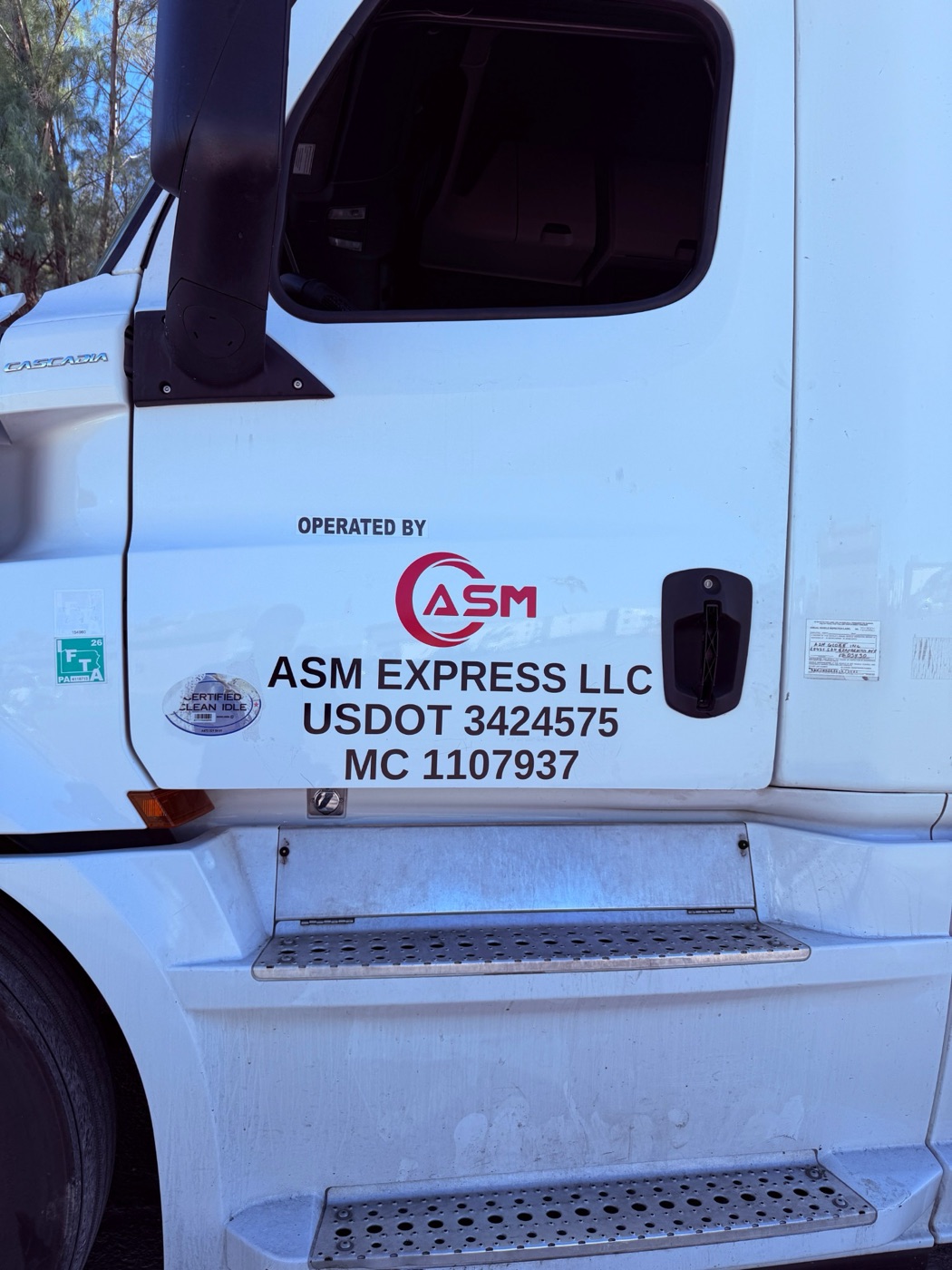
- USDOT and company name on the cab doors of the chip truck and bucket truck These are heavy trucks and the compliance set is part of the order. Keep it clean and separate from the advertising lettering on the box.
- Phone number on the chip box sides and rear, large The chip box is the tallest flat panel on the job site and it faces the neighbors for hours.
- Free estimates line or QR Tree work is quoted on site. 'Free estimates' plus the number turns the neighbor's curiosity into a visit.
Layout by zone: driver door, side, rear
Example text for a tree service business (a made-up company; 555 numbers are placeholders). Real text, so you can read it the way a customer would.
Driver / passenger doors
Summit Tree Service
USDOT 0000000 (if required)
555-0196
Side panels
TREE REMOVAL · TRIMMING · STUMP GRINDING
ISA certified arborist · Licensed & insured · 24-hr storm damage
555-0196
Rear
Free estimates · 555-0196
Stay back · Not responsible for debris
Unit 11
Do you need DOT numbers on a tree service box truck?
Tree service is one of the heaviest home-service trades on the road: a chip truck is a medium-duty chassis with a steel dump box, usually towing a chipper that weighs thousands of pounds on its own; bucket trucks and grapple trucks are heavier still; and even the crew pickup tows a trailer with a stump grinder or mini skid steer. Most of these rigs are rated above the federal marking line, so the DOT markings are the normal case, and the combined truck-plus-chipper rating is what the rule looks at.
The federal rule (from the same verified data as our checker): name and USDOT number on both sides of the power unit from 10,001 lbs (49 CFR 390.21T(b)(2)); other triggers in the federal box below.
The federal baseline, the same in every state
- USDOT Number + Legal / Trade Name, both sides of the power unit (49 CFR 390.21T(b)(2); 49 CFR 390.21T(b)(1))
- Readable from 50 feet in daylight, no inch minimum · sharp contrast
- MC Number: recommended, not required (49 CFR 390.21T)
- Triggers: 10,001 lbs or more · placard-level hazmat · 9+ passengers for hire · 16+ passengers
Verified 2026-07-23 · next review 2026-10-21
Answer 7 questions for your own vehicle
Check your state: California · Florida · Georgia · Massachusetts · New Jersey · Ohio · Texas · Washington · West Virginia. All 50 states.
Tree service vehicle rules by state, verified
These are the tree service vehicle-marking rules we have read in the state's own statute or regulation. States not listed: we have not verified a rule for them (our research notes list which ones were checked).
California: Licensed contractors (CSLB)
| On the vehicle | Business name and contractor's license number, in or on each commercially registered motor vehicle used in the construction business, in a clearly visible location, at least 72-point type or 3/4 inch high and wide. |
|---|
Legal source · verified 2026-10-18 · next review 2027-04-16
Nevada: Licensed contractors (NSCB)
| On the vehicle | The licensee's name and license number on each commercial motor vehicle registered under the licensee's name, letters and numbers approximately 1 1/2 inches high. |
|---|
Legal source · verified 2026-10-18 · next review 2027-04-16
Recommended set for a tree service business
Mistakes tree service owners make with vehicle lettering
- Treating the chip truck like a pickup. It's a commercial truck with a GVWR on the door jamb; the compliance markings go on first, then the advertising.
- Forgetting the chipper. The chipper tows behind the truck every day; the combination's weight is what counts, and the chipper itself is a trailer that can carry the company name.
- Small lettering on a tall box. Chip boxes are 6 to 8 feet tall; the service line can be 18 inches or more.
- Claiming 'arborist' without the certification. Customers check the ISA directory.
- No stay-back decal on a dump box or chipper. Chips and debris go everywhere; the decal is cheap insurance for the windshield behind you.
Tree service vehicle lettering FAQ
Does a tree service chip truck need a USDOT number?
In most cases the truck's GVWR, or the truck plus chipper combined rating, is over the federal line, so if you cross state lines the federal markings apply, and many states apply their own rule to trucks that never leave the state. The checker above runs your numbers and lists the exact markings.
Do the markings go on the chipper too?
The required USDOT and name markings go on the power unit (the truck's cab doors). The chipper can carry your company name and number as advertising, and a stay-back decal, but the compliance set belongs on the truck.
What size lettering for a chip box?
Service lines 12 to 24 inches tall, phone number 8 to 12 inches, so they read from across the street and from passing cars. We lay it out on a photo of your truck on the proof.
Does a tree company need a contractor license number on the truck?
Only California and Nevada, through their general contractor-licensee rules, came up in the states we checked; both are quoted below. Only where the state licenses tree work as a contractor trade and has a vehicle rule for licensees. Tree work is more often regulated by cities and counties.
Can you letter bucket trucks and grapple trucks?
Yes. Same approach: compliance set on the cab doors, company name and services on the biggest flat panels, unit numbers where your crew and dispatch can see them. Fleet pricing from 15 trucks.
More than one vehicle?
Fleet pricing from 15 vehicles, matched layouts across every unit, unit numbers included, one proof for the whole batch.
See fleet & volume pricing →
General information, not legal advice. Each rule above shows the date we last verified it against the cited source; the state agency has the final word.