What to put on a pressure washing trailer
- Services by surface: driveways, house wash, roofs, decks, fleets People search by what they want cleaned. A surface list on the trailer side matches the search in their head.
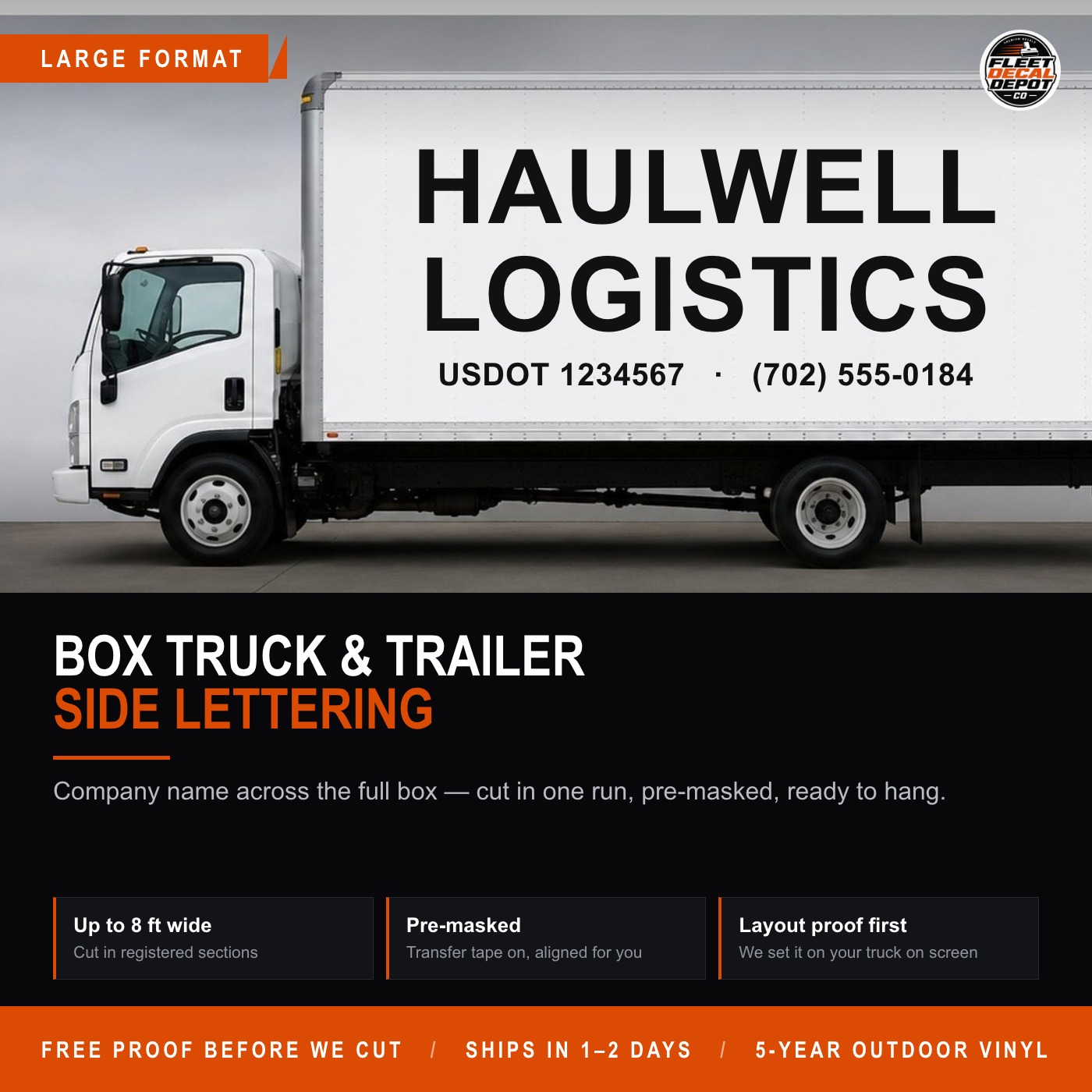
- Company name and phone on the trailer, both sides The trailer is bigger and flatter than the truck and it's what people see parked at the curb. If only the truck is lettered, the trailer is a blank wall at the job.
- 'Soft wash' if you do roofs and siding Homeowners have been warned about pressure on shingles. The phrase soft wash is the password that gets the roof job.
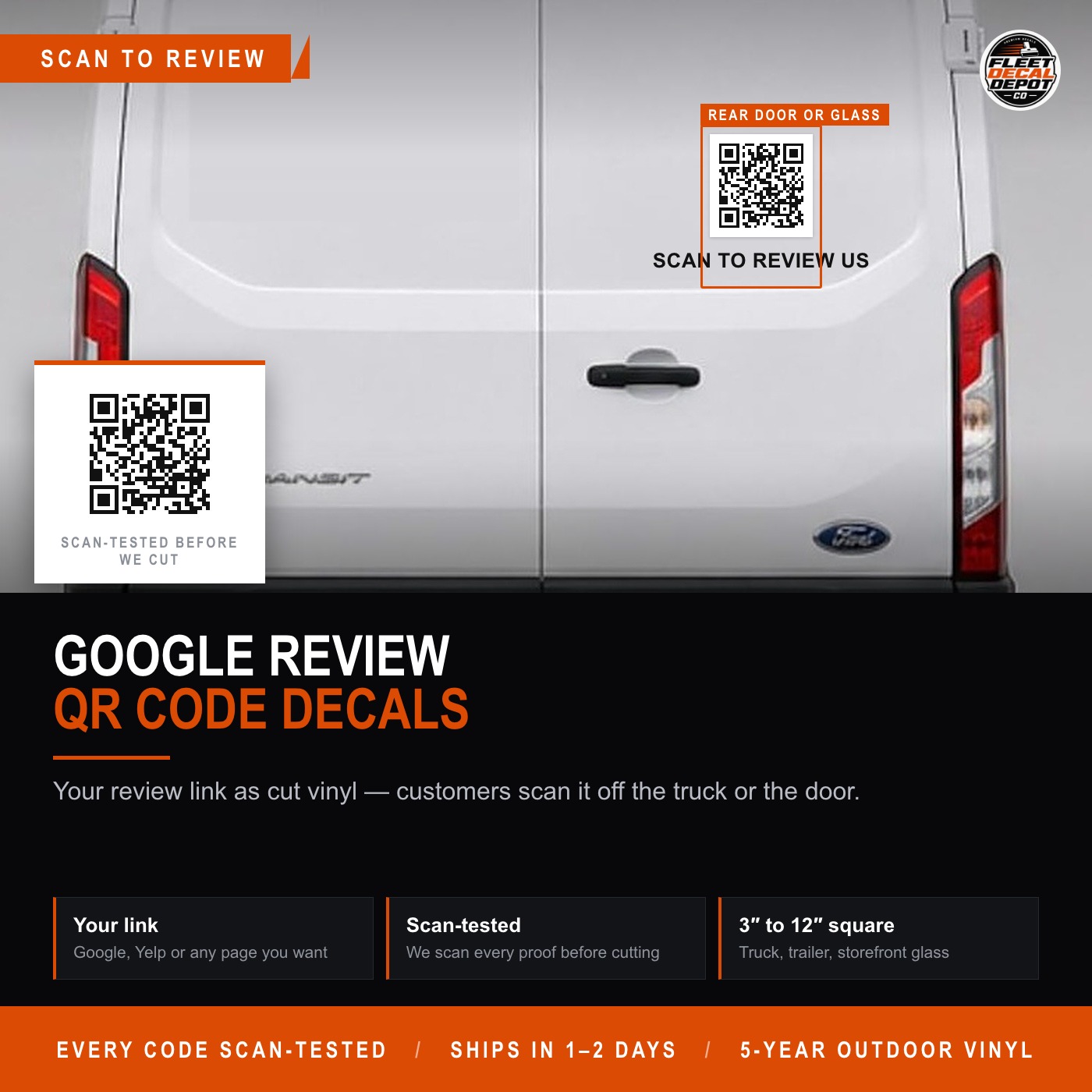
- Before/after QR to reviews Pressure washing is the most photogenic trade there is. A review QR on the rear gate of the trailer turns a dramatic driveway into five stars.
- Insured line Water and electricity around a house make people nervous. 'Licensed & insured' (where true) on the truck door settles it.
- Matching truck door lettering The truck and trailer get separated in the lot and the driveway. Each one should carry the name and number on its own.
Layout by zone: driver door, side, rear
Example text for a pressure washing business (a made-up company; 555 numbers are placeholders). Real text, so you can read it the way a customer would.
Do you need DOT numbers on a pressure washing trailer?
Nothing in the mobile-service world adds weight like a water tank. Water weighs about 8.3 lb per gallon, so a 325-gallon tank is roughly 2,700 lb of water, and a 525-gallon tank is over 4,300 lb, before the trailer, the machine, the hose reels and the surface cleaner. A pickup pulling a loaded wash trailer is a combination, and the federal rule looks at combined weight ratings, not just the truck's. This is the trade where a 'small' business crosses the marking line without noticing.
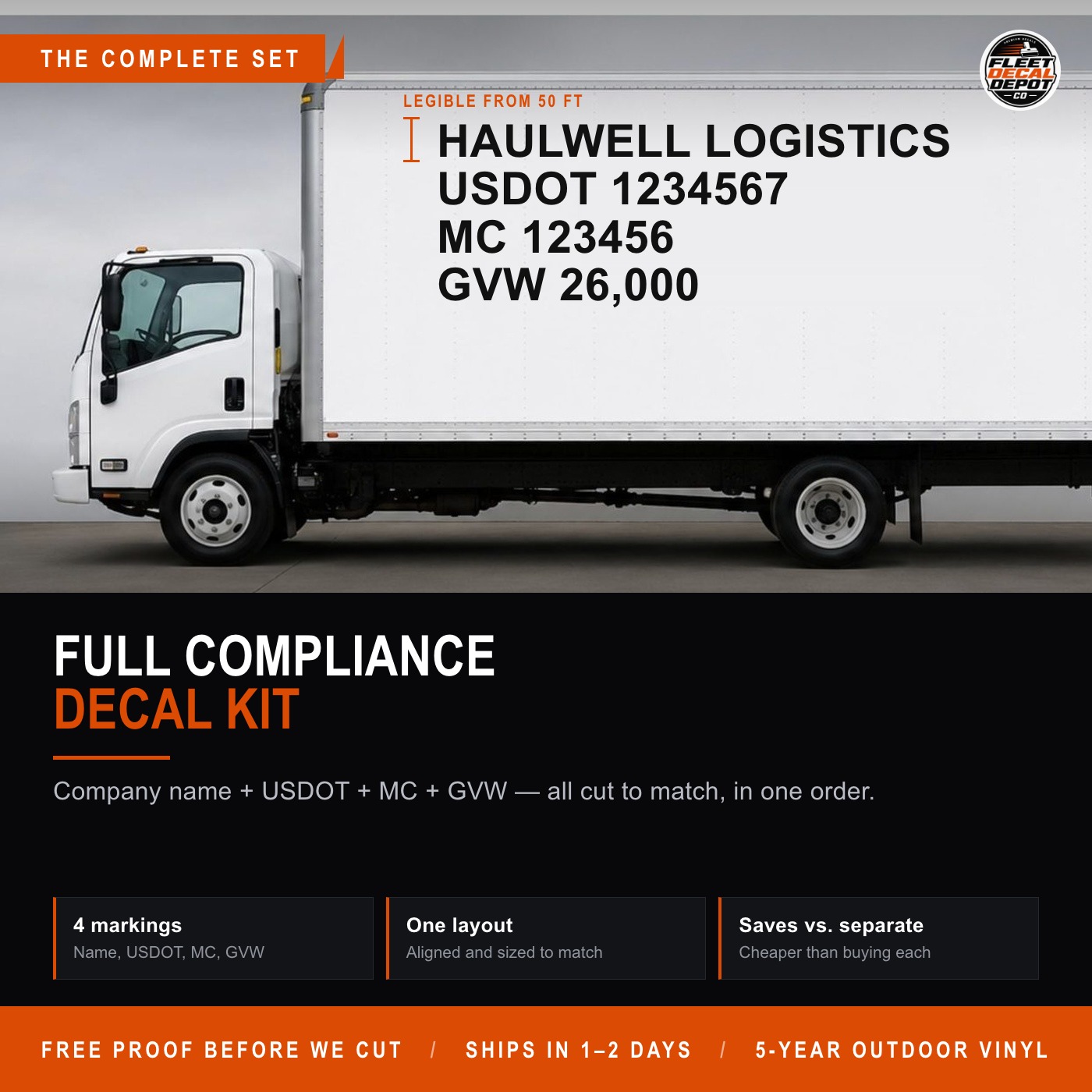
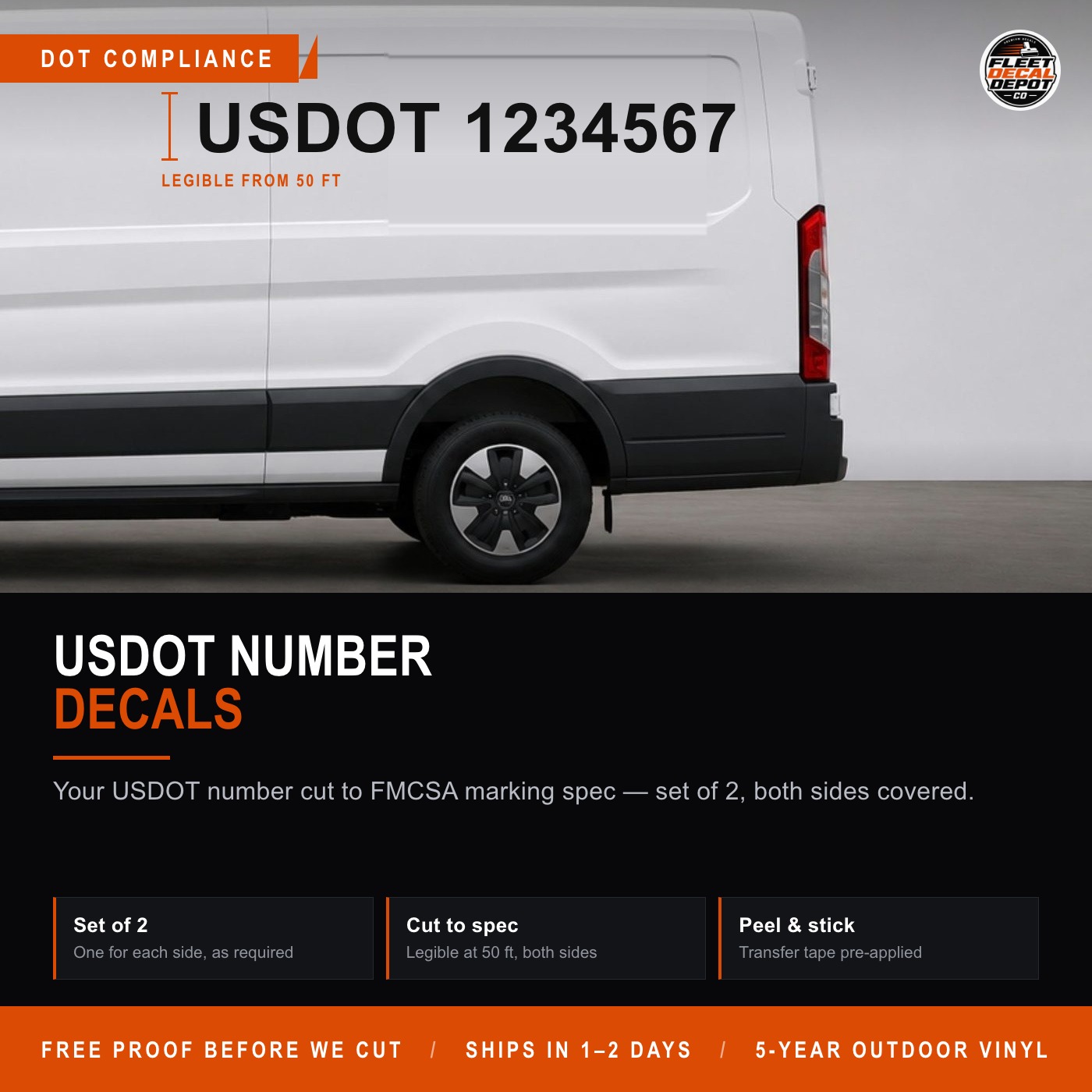
The federal rule (from the same verified data as our checker): name and USDOT number on both sides of the power unit from 10,001 lbs (49 CFR 390.21T(b)(2)); other triggers in the federal box below.
The federal baseline, the same in every state
- USDOT Number + Legal / Trade Name, both sides of the power unit (49 CFR 390.21T(b)(2); 49 CFR 390.21T(b)(1))
- Readable from 50 feet in daylight, no inch minimum · sharp contrast
- MC Number: recommended, not required (49 CFR 390.21T)
- Triggers: 10,001 lbs or more · placard-level hazmat · 9+ passengers for hire · 16+ passengers
Verified 2026-07-23 · next review 2026-10-21
Answer 7 questions for your own vehicle
Loading… or open the checker.
Check your state: California · Florida · Georgia · Massachusetts · New Jersey · Ohio · Texas · Washington · West Virginia. All 50 states.
Recommended set for a pressure washing business
Mistakes pressure washing owners make with vehicle lettering
- Lettering the truck and not the trailer. The trailer is the thing parked at the curb for two hours.
- Ignoring the combined weight. Truck plus loaded trailer is what the rule weighs, and a full tank changes the answer.
- Lettering over a ribbed trailer wall without checking. Corrugated siding needs the letters sized and placed so they don't fall in the valleys.
- 'Power washing' only. Add 'soft wash' or the roof and siding jobs go to someone who says it.
- Phone number in the same color as the stripe. The number has to be the highest-contrast element on the trailer.
Pressure washing vehicle lettering FAQ
Does a pressure washing trailer need a DOT number?
Possibly, and it depends on weight and interstate travel, not on the trade. A pickup pulling a trailer with a full tank can cross the federal combined-weight line; run the checker above with your truck's GVWR and the trailer's rating. If it applies, the markings go on the power unit (the truck), not the trailer.
Which goes on the trailer, the name or the services?
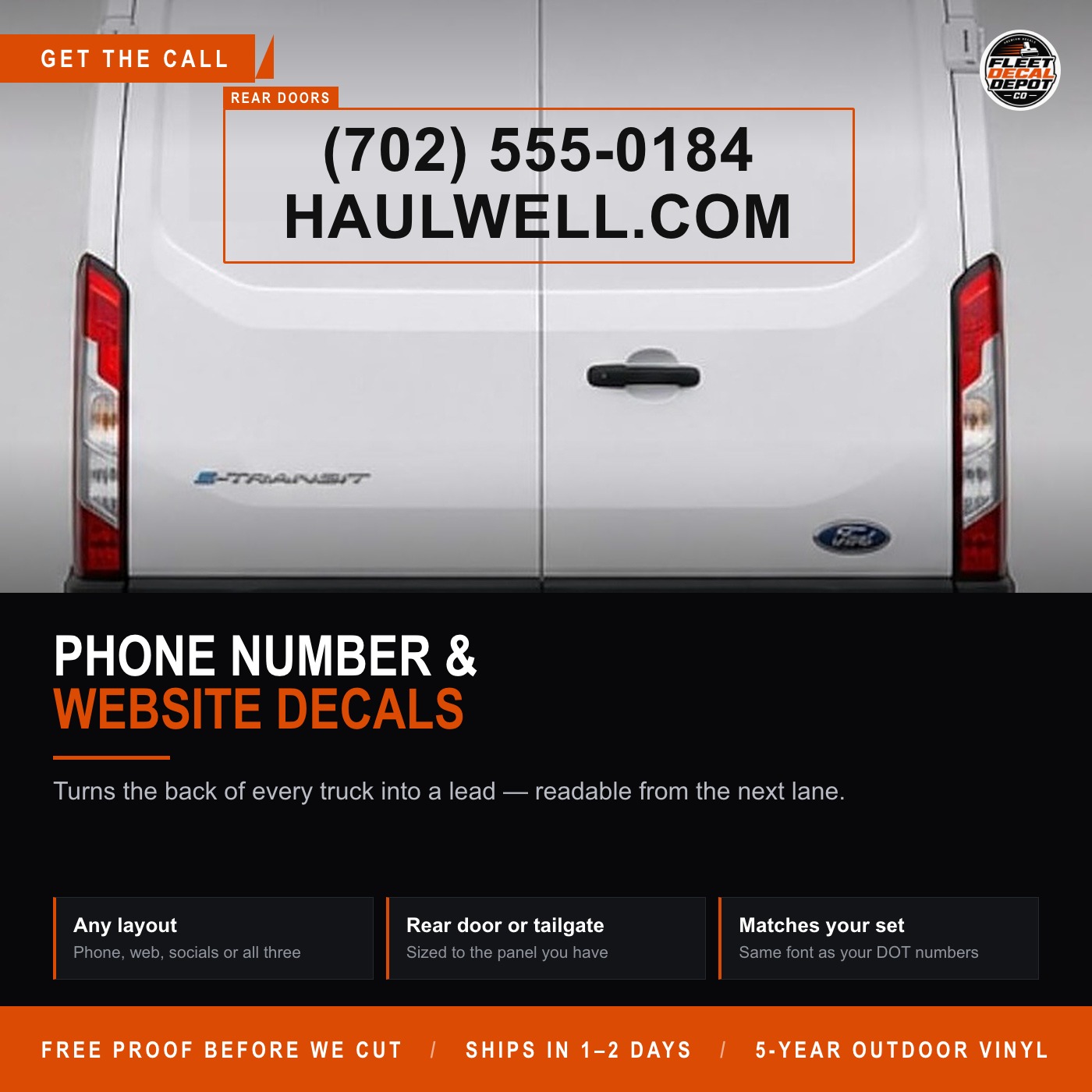
Both, split by side. The services list runs along the top of each side where it reads from far away; the name and number sit under it. The rear gate gets the number and a review QR because that's what faces the street at a job.
Can you letter a trailer with corrugated or ribbed sides?
Yes. We size letters to sit across the ribs or inside the flat bands, and we tell you on the proof which it will be. Smooth enclosed trailers take lettering like a van.
Will chemicals and overspray eat the vinyl?
Household-strength sodium hypochlorite mixes and surfactants rinse off commercial-grade vinyl without damage; rinse the trailer with water at the end of the day like you rinse everything else. Don't pressure-wash the lettering edges at close range.
Do I letter the truck doors too?
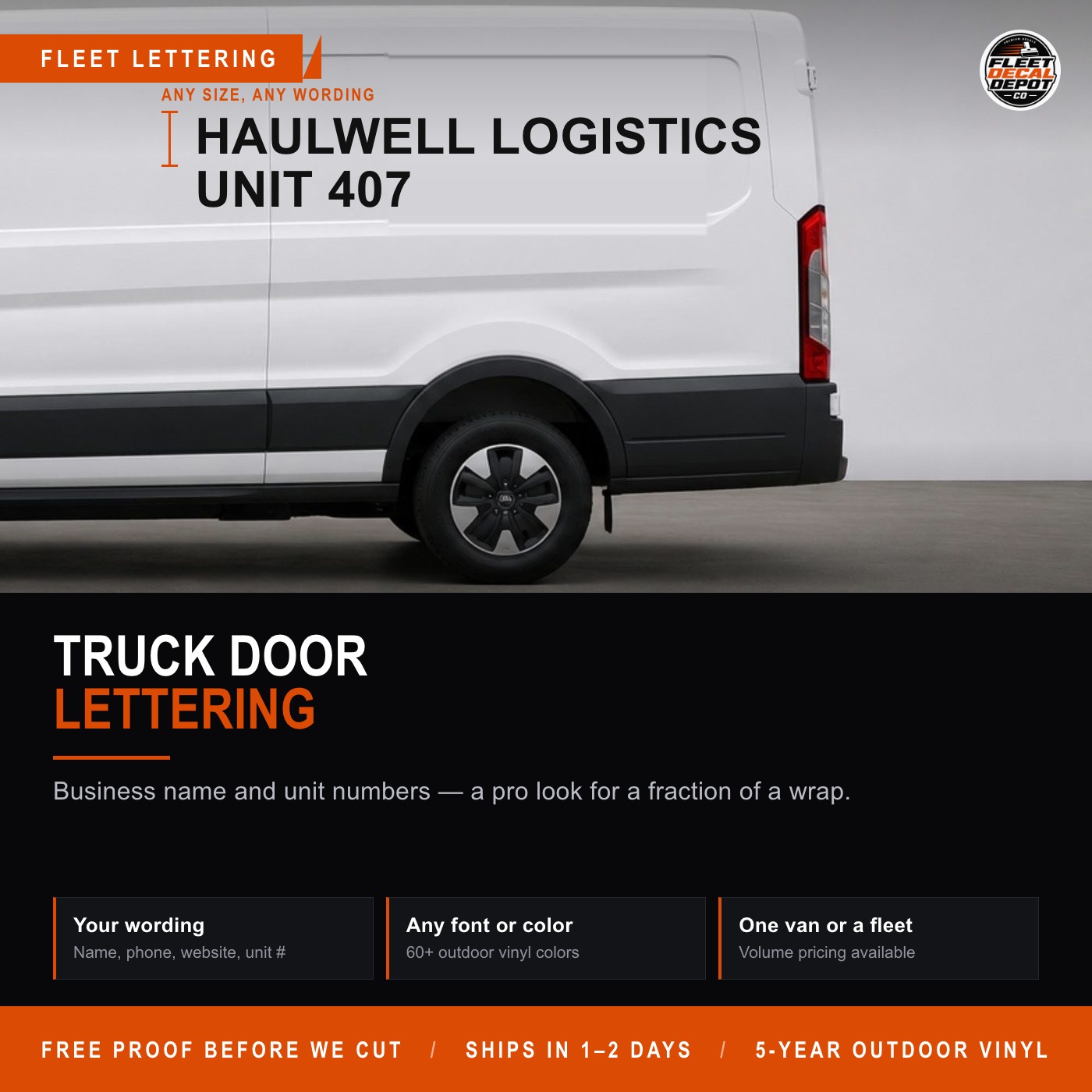
Yes. The truck gets separated from the trailer and still needs to say who you are. A matching door set with the name and number is the minimum.
More than one vehicle?
Fleet pricing from 15 vehicles, matched layouts across every unit, unit numbers included, one proof for the whole batch.
See fleet & volume pricing →General information, not legal advice. Each rule above shows the date we last verified it against the cited source; the state agency has the final word.