What to put on a mobile car detailing cargo van
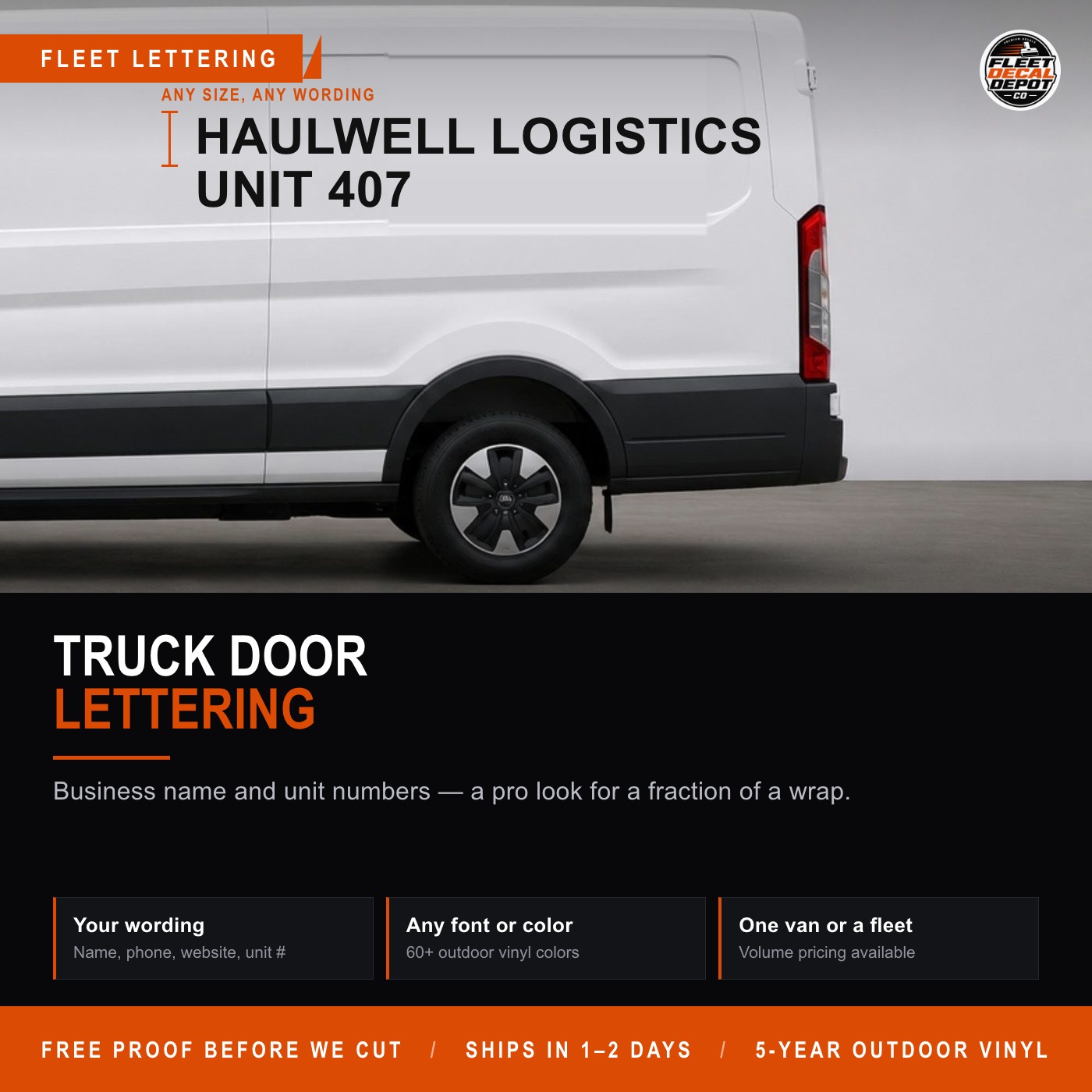
- "Mobile" in the biggest word after your name A detailer's whole pitch is that the customer never leaves home. If the van doesn't say mobile, people assume you have a shop and keep driving.
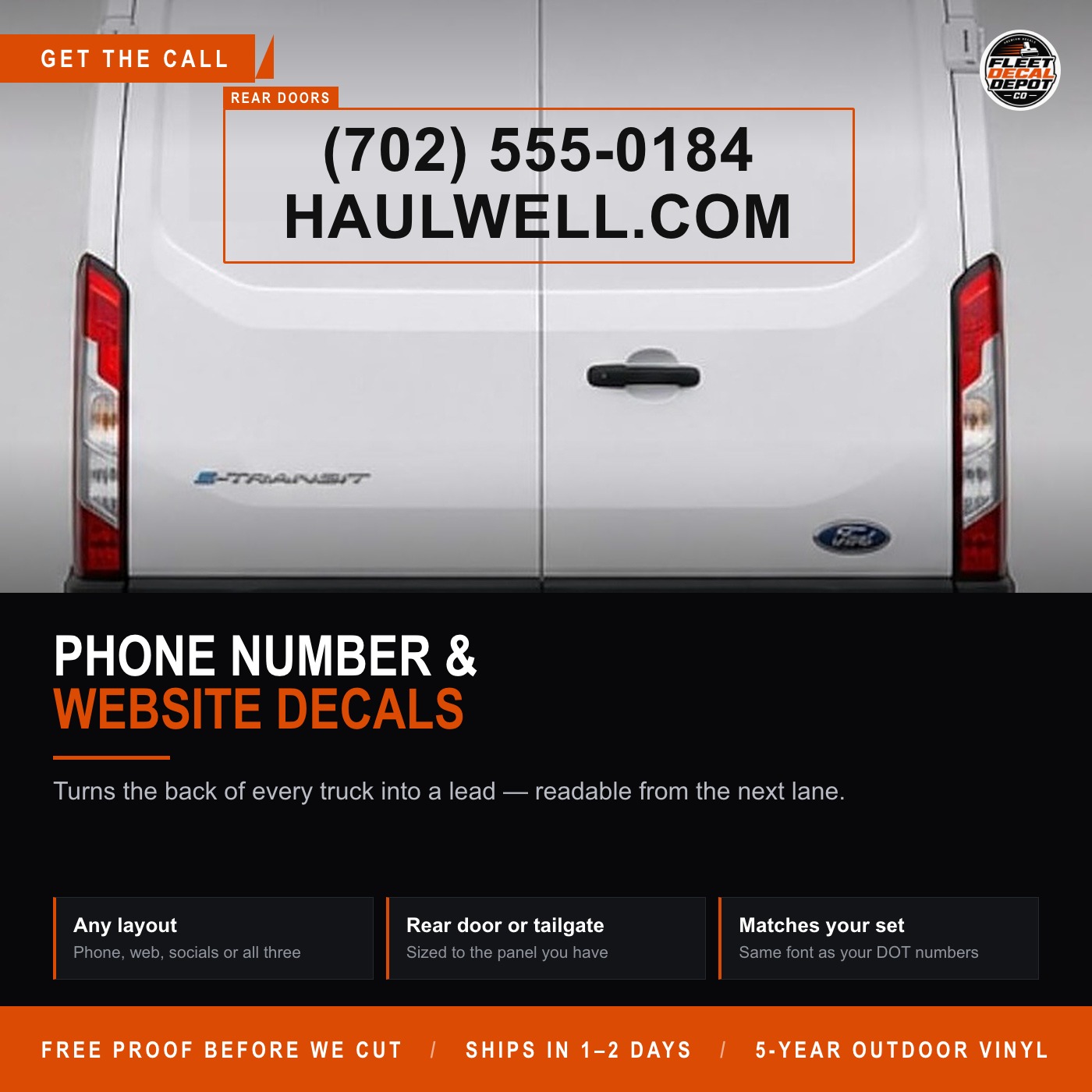
- Phone number that reads at 40 mph Your best leads come from the neighbor across the street while you're working. They read the side of the van from their porch, not up close.
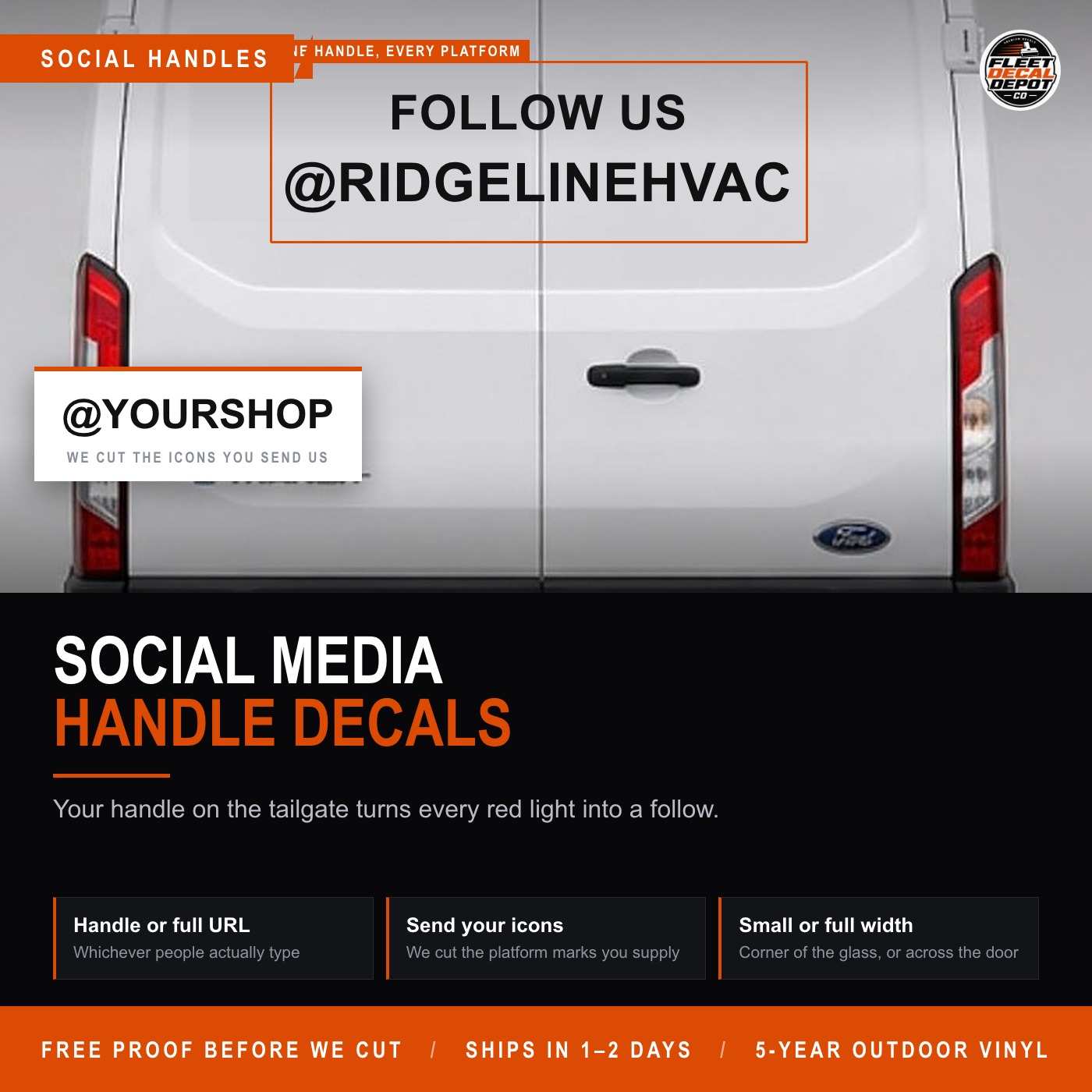
- Instagram or TikTok handle Detailing sells on before-and-after video. The handle on the van sends them to the proof, and the proof books the job.
- Ceramic coating / paint correction, if you do them Those are the high-ticket services. A line that says 'Ceramic coating · Paint correction' separates you from the $40 wash guy.
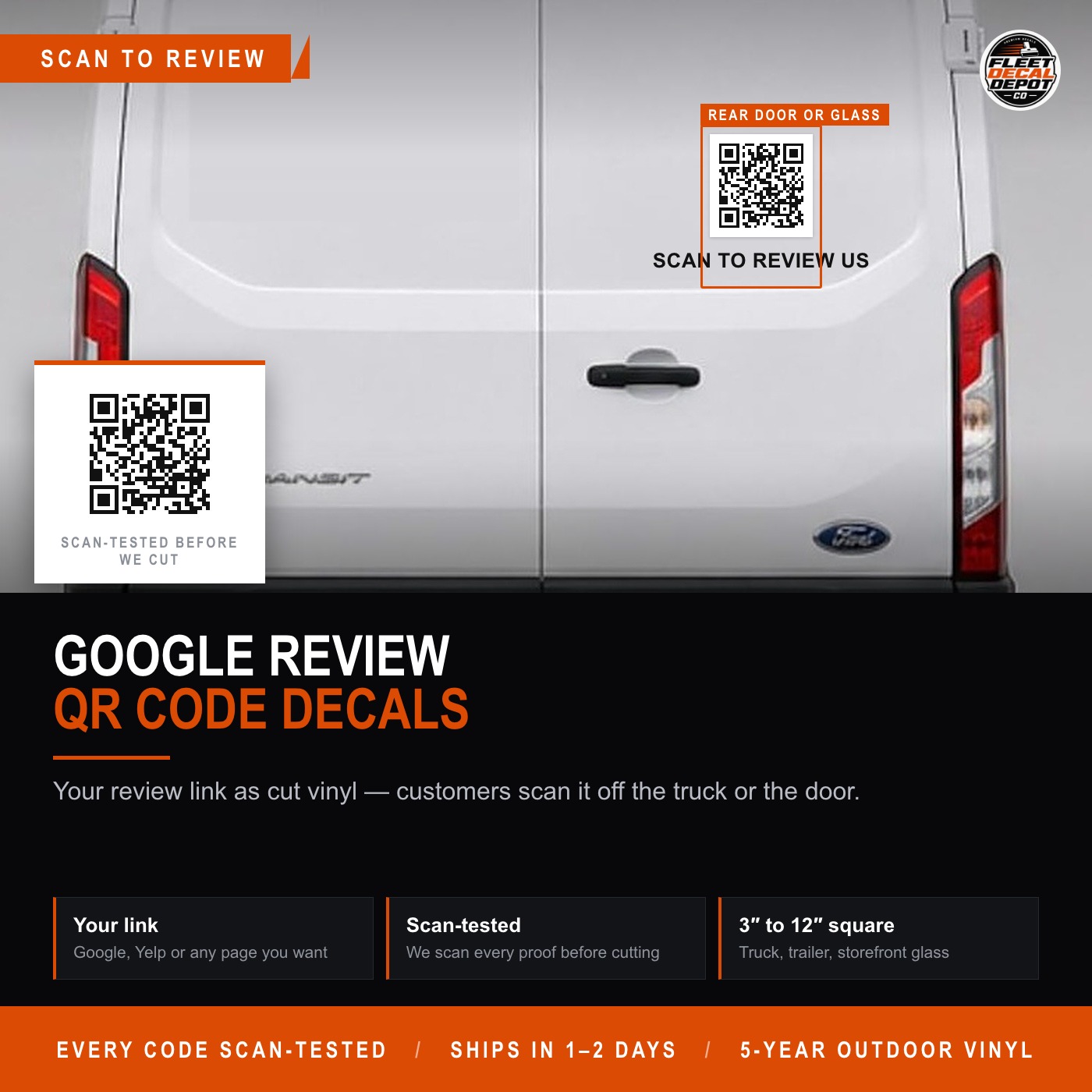
- Booking link QR on the rear doors The rear doors face the street while you work. A 'Scan to book' QR turns a glance into an appointment without a phone call.
- Service area or city 'Serving Henderson & Green Valley' tells the neighbor you'll actually come to them.
Layout by zone: driver door, side, rear
Example text for a mobile car detailing business (a made-up company; 555 numbers are placeholders). Real text, so you can read it the way a customer would.
Do you need DOT numbers on a mobile car detailing cargo van?
A detailing van or trailer carries a water tank, a generator, a pressure washer and chemicals. Water is heavy: a 100-gallon tank is about 830 lb of water alone, and a 200-gallon rig is twice that before the generator. A loaded detailing van with a tank, plus a trailer, can be a lot heavier than the empty van you bought. The federal marking line is a weight line, so the loaded weight and the GVWR sticker on the door jamb are what matter, not what the van looks like.
The federal rule (from the same verified data as our checker): name and USDOT number on both sides of the power unit from 10,001 lbs (49 CFR 390.21T(b)(2)); other triggers in the federal box below.
The federal baseline, the same in every state
- USDOT Number + Legal / Trade Name, both sides of the power unit (49 CFR 390.21T(b)(2); 49 CFR 390.21T(b)(1))
- Readable from 50 feet in daylight, no inch minimum · sharp contrast
- MC Number: recommended, not required (49 CFR 390.21T)
- Triggers: 10,001 lbs or more · placard-level hazmat · 9+ passengers for hire · 16+ passengers
Verified 2026-07-23 · next review 2026-10-21
Answer 7 questions for your own vehicle
Loading… or open the checker.
Check your state: California · Florida · Georgia · Massachusetts · New Jersey · Ohio · Texas · Washington · West Virginia. All 50 states.
Recommended set for a mobile car detailing business
Mistakes mobile car detailing owners make with vehicle lettering
- Lettering only the driver door. The van faces the street side-on while you work; the whole side panel is your billboard.
- A script font for the phone number. Scripts look great on the logo and are unreadable from a moving car. Numbers get a plain block font.
- Leaving off 'mobile'. The one word that explains the business is the one most detailers forget.
- Dark lettering on a dark van. Black on charcoal disappears after the first coat of road dust. White, silver or bright colors on dark vans.
- Buying a wrap before the business is stable. Cut vinyl lettering costs a fraction of a wrap, looks professional, and can be changed when you add services.
Mobile car detailing vehicle lettering FAQ
Do I need a USDOT number for a mobile detailing van?
It depends on the loaded weight of the van (or van plus trailer) and whether you cross state lines; the federal rule and the checker above decide it, not the type of business. Most single-van detailers stay under the line, but a tank-and-trailer setup can cross it.
Vinyl lettering or a full wrap?
Cut vinyl lettering is the right first step for a detailer: a few hundred dollars, installed in an afternoon, and it reads clearly from the street. A printed wrap is a design project that costs several times more. Many of our detailing customers run lettering for years.
What goes on the rear doors?
The rear doors are what the neighbors see while you work in a driveway. Put the thing you want them to do: scan a QR to book, or call the number. Keep the company name smaller there; the side already has it.
Can I put the same lettering on a trailer?
Yes. Trailer sides are usually bigger and flatter than the van, so the lettering can be larger. If the trailer is enclosed, treat it as your main billboard and letter both sides.
What color should the lettering be?
High contrast with the van. White or silver on dark vans, black or dark blue on white vans. A second accent color for the service line is fine; a third starts to look busy.
More than one vehicle?
Fleet pricing from 15 vehicles, matched layouts across every unit, unit numbers included, one proof for the whole batch.
See fleet & volume pricing →General information, not legal advice. Each rule above shows the date we last verified it against the cited source; the state agency has the final word.