What to put on a mobile mechanic service-body truck
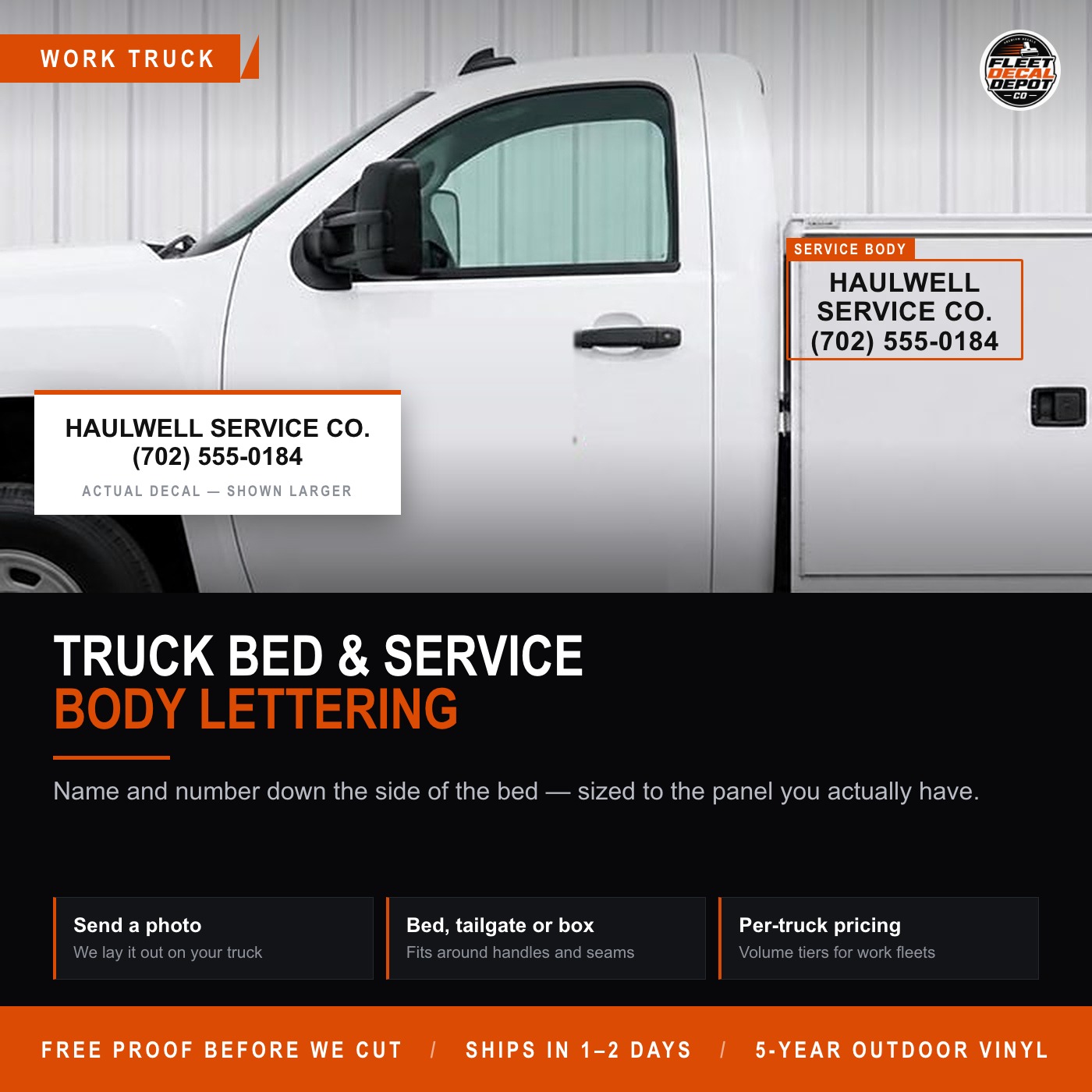
- 'Mobile mechanic' or 'We come to you', largest line A plain service body looks like a utility contractor. The words mobile mechanic are what make the stranded driver pick up the phone.
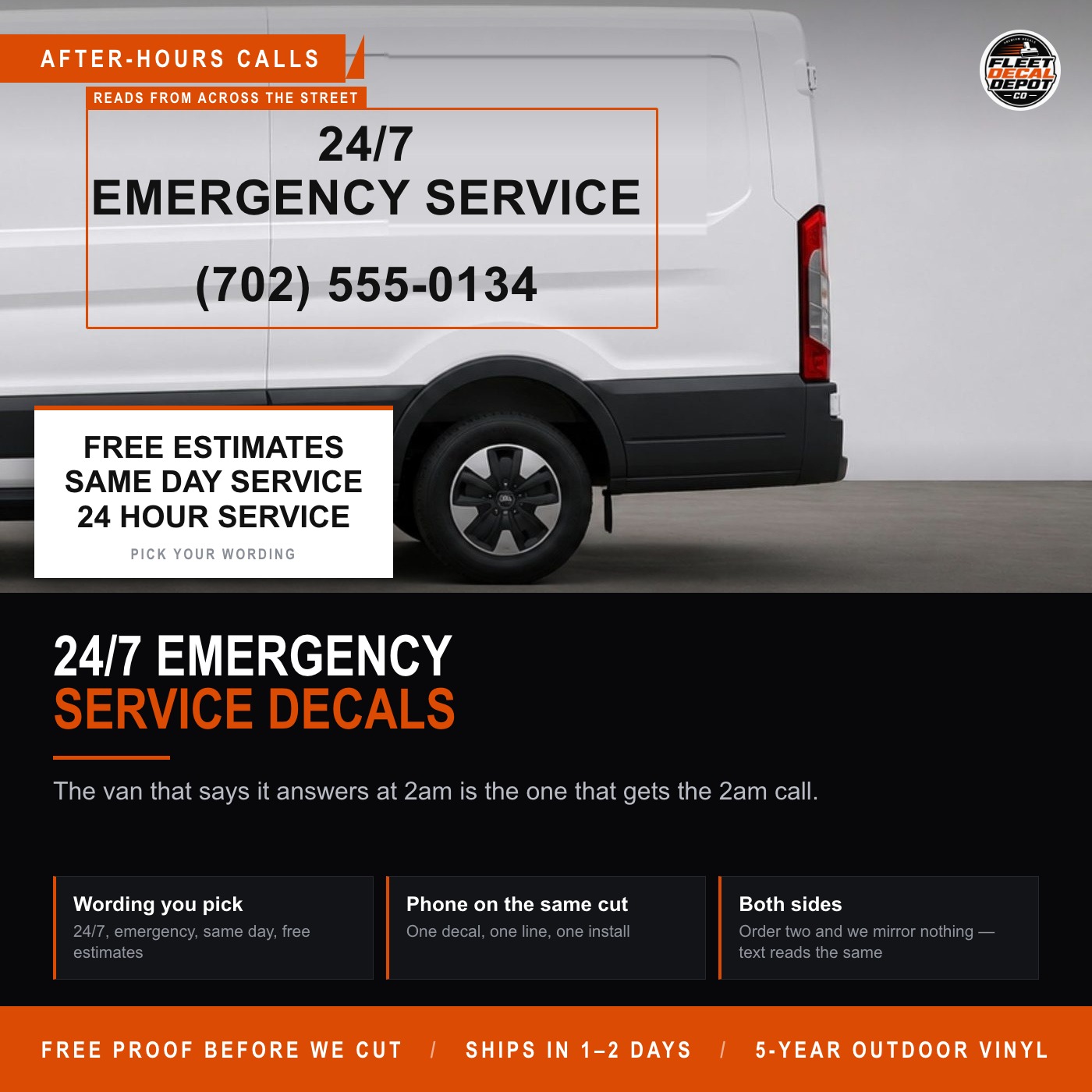
- 24/7 or your real hours Breakdowns don't wait. If you answer at night, say it; if you don't, say the hours so the 2 a.m. caller isn't your first bad review.
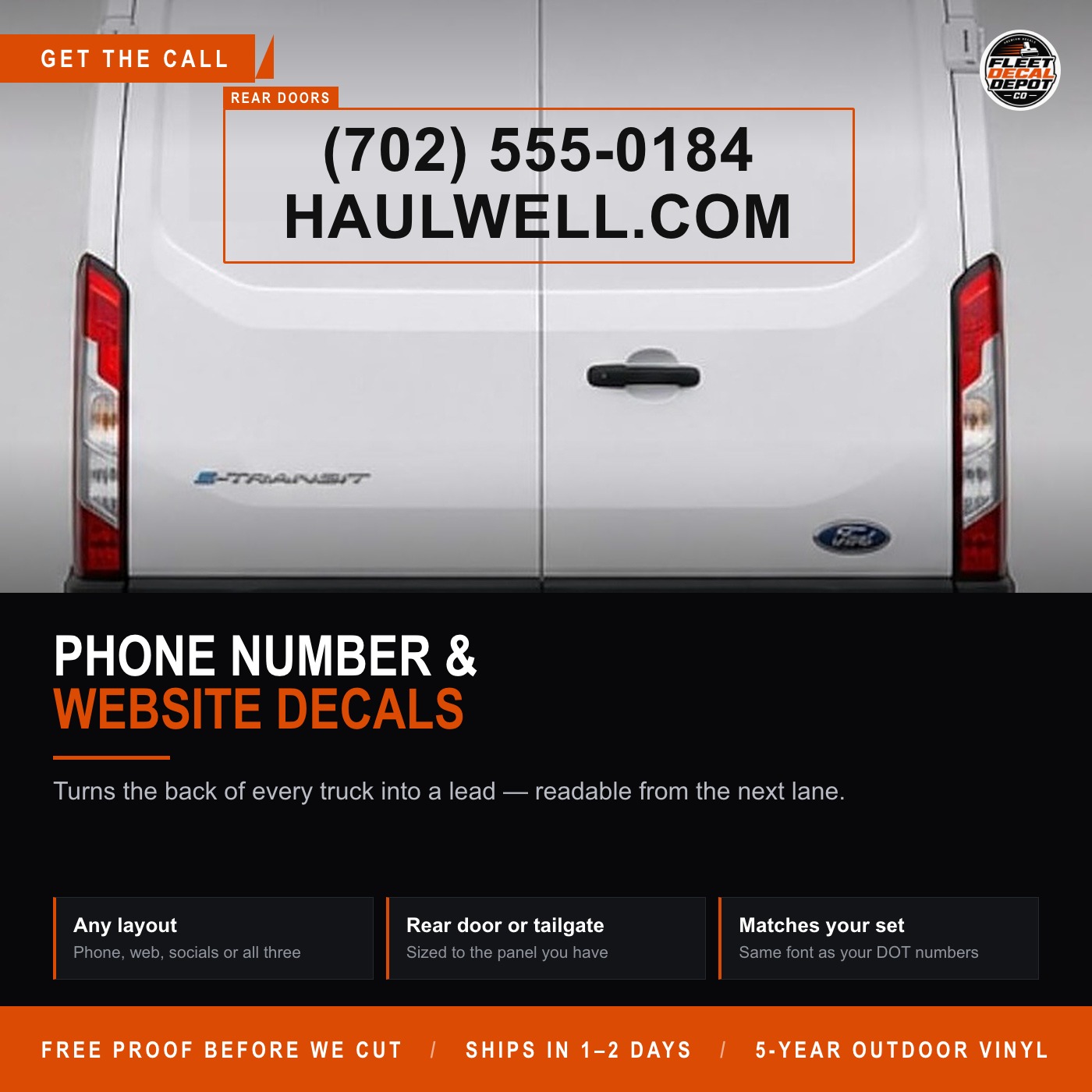
- Phone number on three sides Doors, service body compartment doors and the tailgate. A driver walking up from behind should not have to come around to find the number.
- What you fix: diesel, fleet, RV, brakes, no-starts Fleet managers and RV owners look for their word. Three or four services in a line pull far better than 'auto repair'.
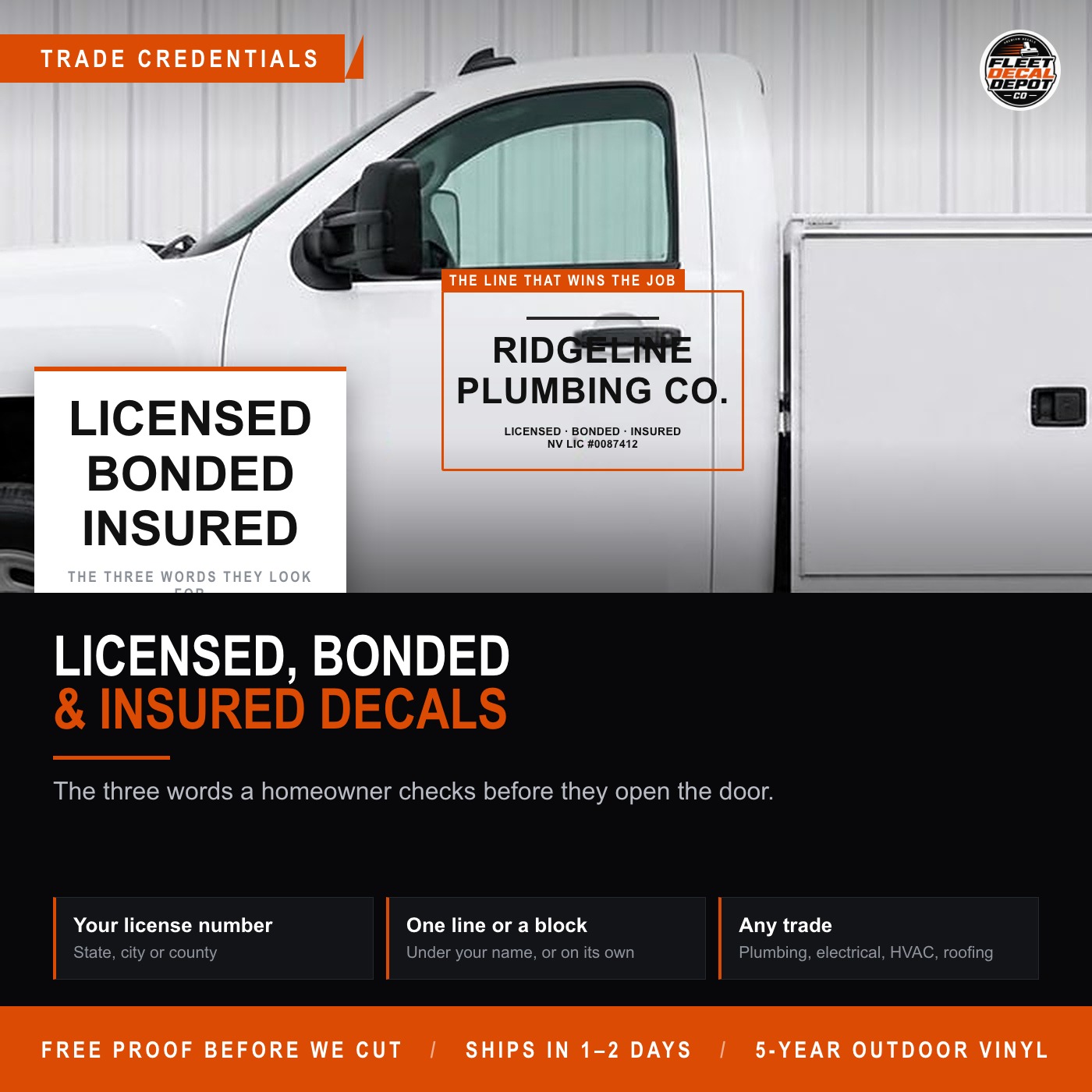
- Licensed / insured line, where you hold them Fleet accounts ask. A small 'Licensed & insured' line next to the number answers before they do.
- Unit number on the bed or roof if you run more than one truck Dispatch, fuel cards and roadside-assistance apps all want a truck number, and it looks like a real fleet.
Layout by zone: driver door, side, rear
Example text for a mobile mechanic business (a made-up company; 555 numbers are placeholders). Real text, so you can read it the way a customer would.
Do you need DOT numbers on a mobile mechanic service-body truck?
A service body truck is a workshop on a chassis: steel compartments full of tools, a compressor, a welder or generator, jacks, fluids, and often a crane or a liftgate. The body alone can weigh well over a thousand pounds before the first wrench goes in, which is why most mobile mechanics run a 3/4-ton or 1-ton chassis. Whether the loaded truck is over the federal marking line depends on the GVWR on the door jamb (and the trailer, if you tow one), so run the checker with the real numbers.
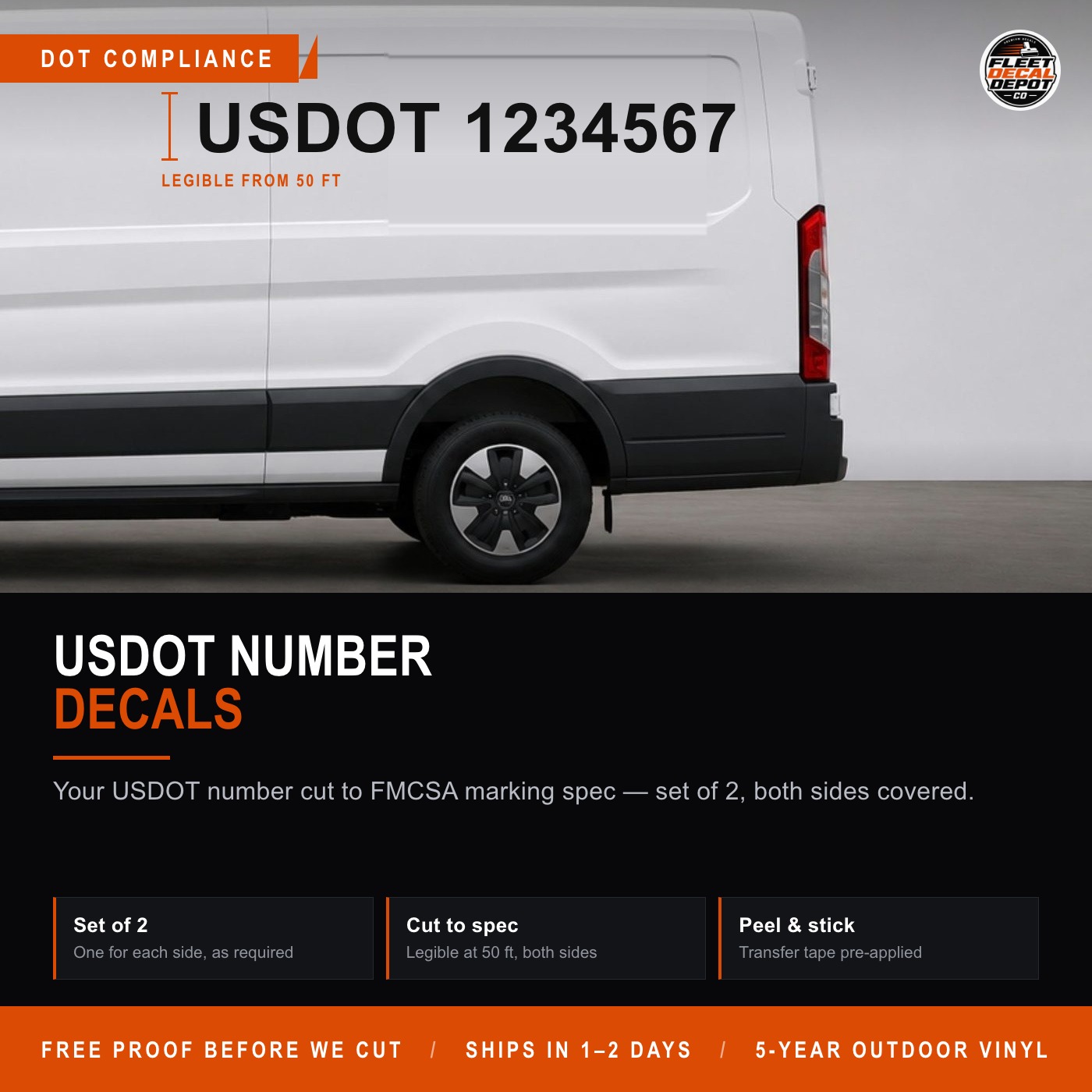
The federal rule (from the same verified data as our checker): name and USDOT number on both sides of the power unit from 10,001 lbs (49 CFR 390.21T(b)(2)); other triggers in the federal box below.
The federal baseline, the same in every state
- USDOT Number + Legal / Trade Name, both sides of the power unit (49 CFR 390.21T(b)(2); 49 CFR 390.21T(b)(1))
- Readable from 50 feet in daylight, no inch minimum · sharp contrast
- MC Number: recommended, not required (49 CFR 390.21T)
- Triggers: 10,001 lbs or more · placard-level hazmat · 9+ passengers for hire · 16+ passengers
Verified 2026-07-23 · next review 2026-10-21
Answer 7 questions for your own vehicle
Loading… or open the checker.
Check your state: California · Florida · Georgia · Massachusetts · New Jersey · Ohio · Texas · Washington · West Virginia. All 50 states.
Recommended set for a mobile mechanic business
Mistakes mobile mechanic owners make with vehicle lettering
- Lettering the doors and leaving the service body blank. The compartment doors are the biggest flat panels on the truck, and they face the customer while you work.
- A phone number only on the driver door. Stranded drivers approach from the rear or the passenger side.
- 'Automotive services' instead of 'mobile mechanic'. Vague trade names get mistaken for a dealership runner.
- Reflective lettering where it isn't needed and none where it is. If you work on shoulders at night, reflective on the rear makes you visible; it is a safety choice first, a look second.
- No unit number once there are two trucks. Dispatchers and fleet customers reference trucks by number.
Mobile mechanic vehicle lettering FAQ
Does a mobile mechanic truck need a USDOT number?
It comes down to weight and interstate operation, not the trade. A 1-ton service body with a trailer can cross the federal line; a half-ton with a toolbox usually does not. The checker above runs your truck against the federal rule and your state's rule and lists what applies.
Where does the phone number go on a service body?
Both cab doors, the rear of the service body (tailgate or rear compartment door) and, if there's room, the top compartment doors on each side. The goal is that the number is visible from any side the customer walks up from.
Should the lettering be reflective?
If you work roadside at night, reflective lettering on the rear and sides makes the truck visible in headlights at the same time as it advertises. For a truck that works in lots and driveways, standard vinyl is fine.
Can you letter the compartment doors?
Yes. Service body doors are flat aluminum or steel and take vinyl well. We cut each door's lettering as its own piece so it lines up with the door seams instead of crossing them.
What about a fleet of mobile mechanic trucks?
Fleet pricing kicks in at 15 trucks, and we match fonts, sizes and colors across every truck so the fleet reads as one company. Unit numbers are part of the set.
More than one vehicle?
Fleet pricing from 15 vehicles, matched layouts across every unit, unit numbers included, one proof for the whole batch.
See fleet & volume pricing →General information, not legal advice. Each rule above shows the date we last verified it against the cited source; the state agency has the final word.